
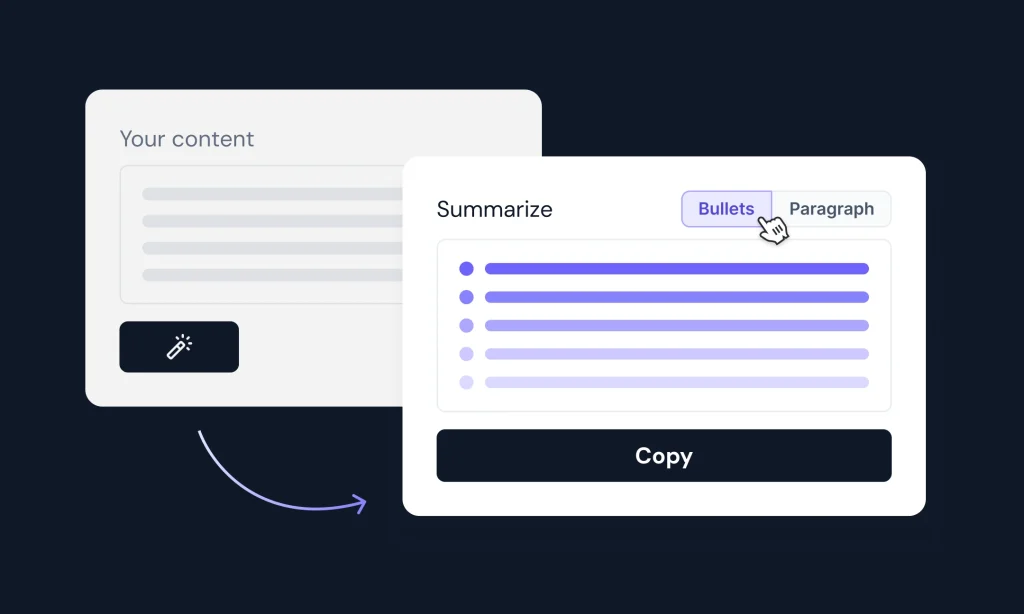
In the modern digital landscape, information overload has become a defining challenge for both academic scholars and content creators. The sheer volume of research papers, news articles, blog posts, and reports published every minute makes it nearly impossible to consume everything manually while maintaining high productivity. This is where artificial intelligence steps in as a transformative force. Specifically, AI text summarizer tools have evolved from simple novelty apps into essential utilities that streamline workflows, enhance comprehension, and save countless hours. For students grappling with dense textbooks and bloggers needing to synthesize trends quickly, accessing high-quality, free summarization software is no longer a luxury but a necessity. Understanding how these tools function and selecting the right one can significantly impact academic performance and content strategy.
The core mechanism behind these tools lies in Natural Language Processing (NLP), a branch of artificial intelligence focused on the interaction between computers and human language. Advanced algorithms analyze text structures, identify key themes, and distinguish between primary arguments and supporting details. According to research from institutions like Stanford University, NLP models have reached a level of sophistication where they can understand context and nuance far better than earlier keyword-extraction methods. This technological leap means that today’s free tools can generate summaries that are not just shortened versions of the original text but coherent narratives that retain the original meaning. For users who rely on accuracy, knowing that the underlying technology is backed by rigorous computer science principles provides a layer of trust essential for academic and professional use.
For students, the application of these tools extends far beyond simply shortening essays. The primary value proposition is the ability to rapidly digest complex material. When facing a stack of journal articles for a literature review or a lengthy case study for a business class, an AI summarizer can provide a concise abstract that highlights the methodology, results, and conclusions. This allows the student to decide quickly whether a source is relevant enough to read in full, optimizing study time. Furthermore, these tools serve as excellent aids for note-taking and revision. By converting long lecture transcripts or textbook chapters into bullet points, students can create study guides more efficiently. However, it is crucial to approach these tools with an understanding of academic integrity. Reputable educational guidelines, such as those found on Purdue OWL, emphasize that while AI can assist in processing information, the critical analysis and final synthesis must remain the work of the student to avoid plagiarism and ensure genuine learning.
Bloggers and content marketers face a different set of challenges where speed and trend awareness are paramount. In the competitive world of SEO and content creation, being the first to cover a breaking story or a new industry report can determine the success of a post. AI summarizers allow writers to scan dozens of source materials in minutes, extracting the most newsworthy facts and statistics needed to build a comprehensive article. This capability supports the creation of “curated content” or round-up posts, where a blogger aggregates insights from various experts into a single, valuable resource for their audience. Additionally, these tools help in repurposing content; a long-form whitepaper can be summarized into a series of social media captions or a newsletter snippet, maximizing the reach of a single piece of intellectual property. The Content Marketing Institute frequently highlights how efficiency in research phases directly correlates with higher output quality and consistency, which are key drivers for audience growth.
Despite the clear benefits, the market is flooded with options, ranging from browser extensions to standalone web platforms, making the selection process daunting. Many tools claim to be free but impose severe limitations on word count, daily usage, or feature access, effectively rendering them useless for heavy users. Others may produce summaries that are grammatically correct but semantically hollow, missing the point of the original text entirely. Therefore, evaluating these tools requires a critical eye toward their specific algorithms, user interface design, and privacy policies. It is essential to choose platforms that prioritize data security, especially when uploading unpublished drafts or sensitive academic work. Resources like Electronic Frontier Foundation offer valuable insights into digital privacy, reminding users to verify how their data is stored and whether it is used to train public models without consent.
One of the most significant advantages of modern free AI summarizers is their adaptability to different summarization styles. Generally, these tools operate in two modes: extractive and abstractive. Extractive summarization works by identifying and pulling the most important sentences directly from the source text, essentially creating a highlight reel. This method is highly accurate regarding factual retention but can sometimes feel disjointed if the original text lacks clear topic sentences. Abstractive summarization, on the other hand, generates new sentences that paraphrase the original content, mimicking how a human would summarize a story. This approach often yields more fluent and natural-sounding results but carries a slightly higher risk of hallucination or misinterpretation if the model is not well-trained. Users must understand this distinction to select the tool that best fits their specific needs, whether it is preserving exact legal phrasing or creating a smooth narrative overview.
When considering tools for academic use, the ability to handle citations and technical terminology is vital. Students in fields like medicine, law, or engineering often encounter jargon that general-purpose summarizers might simplify incorrectly, leading to a loss of precision. High-quality tools designed with academic datasets can recognize these terms and maintain their integrity within the summary. Furthermore, some advanced platforms offer features like multi-document summarization, where the AI synthesizes information from several uploaded files to find common threads and contradictions. This is particularly useful for thesis research or capstone projects. Universities and libraries increasingly acknowledge the role of such technologies in research literacy, as noted in publications by the Association of College and Research Libraries, which discuss how digital tools can augment rather than replace critical thinking skills.
For bloggers, the integration capabilities of a summarizer tool can be just as important as the summarization quality itself. Tools that offer browser extensions allow writers to summarize articles directly while browsing, eliminating the need to copy and paste text into a separate window. This seamless workflow reduces friction and keeps the creative momentum going. Additionally, some platforms provide tone adjustment features, allowing the user to request a summary that is formal, casual, or persuasive, aligning the output with the blog’s brand voice. The ability to export summaries directly to formats like Markdown, Google Docs, or WordPress drafts further enhances productivity. In the fast-paced environment of digital publishing, minimizing the steps between research and drafting is a competitive advantage that can lead to more frequent and timely content publication.
Cost is naturally a primary concern for students and independent bloggers who may not have large budgets for software subscriptions. Fortunately, the “freemium” model has democratized access to powerful AI technologies. Many reputable companies offer robust free tiers that are sufficient for regular individual use, reserving premium features like bulk processing or API access for enterprise clients. It is important, however, to read the fine print regarding usage limits. Some tools reset daily limits every 24 hours, while others operate on a monthly quota. Understanding these constraints helps users plan their workflow effectively, perhaps by batching their summarization tasks to maximize the free allowance. Comparative reviews from tech authorities like CNET often break down these pricing structures, helping users identify which free tools offer the best value without hidden costs or aggressive upselling tactics.
Accuracy and reliability remain the cornerstone of any useful summarization tool. A summary that omits a critical negative finding in a scientific study or misrepresents a statistic in a financial report can lead to serious consequences. Therefore, the best practice is always to treat the AI output as a draft or a guide rather than a final product. Users should cross-reference the generated summary with the original text to ensure no vital context was lost. This verification step is where human expertise complements machine efficiency. By combining the speed of AI with human judgment, students and writers can achieve a level of thoroughness that neither could accomplish alone. Educational bodies and style guides consistently reinforce the importance of source verification, ensuring that the final output reflects truth and accuracy.
The ethical dimension of using AI summarizers also warrants careful consideration. While these tools are incredibly helpful, over-reliance can potentially atrophy a person’s own reading comprehension and synthesis skills. For students, the goal should be to use the tool to accelerate the initial understanding of a text, followed by deep reading of key sections to foster critical engagement. For bloggers, the tool should serve as a research assistant, not a ghostwriter. The unique voice, perspective, and analytical depth that readers value come from the human creator, not the algorithm. Maintaining this balance ensures that the technology serves as a bridge to knowledge rather than a barrier to genuine intellectual development. Discussions on ethics in AI, such as those hosted by MIT Technology Review, often highlight the importance of keeping humans in the loop to maintain accountability and quality.
Security and data privacy are non-negotiable aspects when selecting a free tool. Users must be vigilant about where their text is processed and stored. Uploading copyrighted material, unpublished manuscripts, or confidential data to an unsecured platform poses significant risks. Trusted providers usually have clear privacy policies stating that user data is not retained after the session ends or used to train their models without explicit permission. Before committing to a specific tool, it is advisable to review their terms of service and look for endorsements or audits from cybersecurity firms. Being proactive about data protection safeguards intellectual property and maintains the confidentiality of sensitive information, a principle strongly advocated by organizations like the National Institute of Standards and Technology (NIST).
Comparative Analysis of Top Free AI Summarizers
To assist in making an informed decision, the following table compares several popular free AI text summarizer tools based on key criteria relevant to students and bloggers. This comparison evaluates word count limits, summarization types, additional features, and ideal use cases.
| Tool Name | Free Tier Limits | Summarization Type | Key Features | Best Use Case |
|---|---|---|---|---|
| QuillBot | ~125 words per input (with mode limits) | Abstractive & Paraphrasing | Multiple modes (Standard, Fluency, Creative), Grammar checker integration | Students needing to paraphrase and summarize simultaneously for essays |
| SMMRY | Unlimited length (ad-supported) | Extractive | Adjustable summary length percentage, clean interface, no login required | Bloggers needing quick, raw extraction of key points from long articles |
| Resoomer | Limited daily summaries | Extractive & Abstractive | Multi-language support, audio playback of summaries, YouTube video summarization | Researchers dealing with multilingual sources or video content |
| SummarizeBot | Varies by platform integration | Abstractive | Integrates with Slack, Telegram, and email; handles PDFs and URLs | Teams and bloggers who want summaries delivered directly to communication channels |
| TLDR This | Generous free daily limit | Abstractive | Browser extension available, key takeaways bullet points, mobile app | Daily readers and students who need instant summaries while browsing |
| Paraphraser.io | ~1000 words per day | Abstractive | Plagiarism checker add-on, tone adjustment, sentence rephrasing | Content creators focusing on originality and avoiding duplicate content issues |
| Notion AI (Free Trial/Limited) | Limited queries in free plan | Abstractive | Integrated within workspace, action items extraction, tone change | Users already managing notes and projects within the Notion ecosystem |
| Google Gemini (Free Version) | High context window limits | Abstractive | Conversational interface, ability to ask follow-up questions, multimodal input | Complex research tasks requiring interactive clarification and deep dives |
Each of these tools brings a unique strength to the table, and the optimal choice depends heavily on the specific workflow of the user. For instance, a student writing a thesis might prefer QuillBot for its ability to help rephrase complex sentences while summarizing, ensuring the final text flows well. In contrast, a news blogger monitoring hundreds of RSS feeds might favor TLDR This for its browser extension capabilities that provide instant insights without leaving the current tab. The diversity in the market ensures that there is a suitable solution for every type of user, provided they take the time to test a few options against their specific requirements.
It is also worth noting that the landscape of AI tools is dynamic, with features and limits changing frequently. What is free today might become a premium feature tomorrow, or a new competitor might emerge with a superior algorithm. Staying updated through tech news outlets and community forums is a good strategy for users to ensure they are always leveraging the best available resources. The flexibility to switch between tools or use a combination of them often yields the best results, allowing users to capitalize on the specific strengths of each platform.
Frequently Asked Questions
Are free AI summarizer tools accurate enough for academic research?
While free AI summarizers are highly effective at identifying main ideas and structuring information, they should not be solely relied upon for critical academic research without verification. These tools are excellent for preliminary scanning and note-taking, helping researchers quickly gauge the relevance of a paper. However, nuances, specific data points, and complex logical arguments can occasionally be oversimplified or misinterpreted. Academic standards require rigorous validation, so it is essential to cross-check the summary against the original source text. Using these tools as a supplement to, rather than a replacement for, critical reading ensures that the integrity of the research is maintained.
Can using an AI summarizer lead to plagiarism accusations?
Using an AI summarizer does not inherently constitute plagiarism, but how the output is used determines whether it violates academic or professional integrity policies. If a user copies the AI-generated summary verbatim and submits it as their own original work without attribution or further synthesis, it can be flagged as plagiarism by detection software. Most educational institutions and publishing platforms consider unattributed AI-generated content as a form of academic dishonesty. To avoid this, users should treat the summary as a reference guide, rewrite the insights in their own voice, add their own analysis, and properly cite the original sources of the information.
Do these tools work well with technical or specialized subjects?
The performance of AI summarizers on technical subjects varies depending on the sophistication of the underlying model. General-purpose tools may struggle with highly specialized jargon in fields like quantum physics, advanced law, or niche medical procedures, potentially simplifying terms to the point of inaccuracy. However, newer models trained on diverse and extensive datasets are becoming increasingly proficient at handling domain-specific language. For best results with technical content, it is advisable to use tools that explicitly mention support for academic or professional texts, and always review the output for terminological precision.
Is my data safe when I paste text into a free summarizer?
Data safety depends entirely on the specific privacy policy of the tool being used. Reputable providers typically state in their terms of service that they do not store user inputs permanently or use them to train public models without consent. However, free services often monetize through ads or data aggregation, which can raise privacy concerns. Users should avoid pasting sensitive, confidential, or unpublished proprietary information into unknown or unverified platforms. Looking for tools that comply with major data protection regulations like GDPR or those that offer end-to-end encryption provides a higher level of security assurance.
How do extractive and abstractive summarization differ in practical application?
Extractive summarization selects existing sentences from the source text to form a summary, ensuring that the wording is exactly as the author intended. This is ideal for legal documents or situations where precise phrasing is critical. Abstractive summarization generates new sentences that convey the same meaning as the original but in different words, similar to how a human would explain a concept. This method produces smoother, more readable summaries and is generally better for blog posts, news digests, and general study notes where flow and readability are prioritized over verbatim accuracy.
The Path Forward in Digital Literacy
The integration of AI text summarizer tools into the daily routines of students and bloggers represents a significant shift in how information is processed and utilized. These technologies offer a powerful means to cut through the noise of the information age, allowing individuals to focus on analysis, creativity, and strategic thinking rather than getting bogged down in the mechanics of reading and condensing text. The availability of high-quality free options ensures that these benefits are accessible to everyone, regardless of budget, leveling the playing field for independent creators and learners alike. As these tools continue to evolve, becoming more nuanced and context-aware, their role in education and content creation will only deepen.
However, the true power of these tools is unlocked only when they are used responsibly and critically. They are not magic wands that eliminate the need for effort; rather, they are sophisticated assistants that amplify human capability. The most successful users will be those who view AI as a partner in their workflow, one that handles the heavy lifting of data processing while they provide the oversight, ethical judgment, and creative insight. By maintaining a balance between technological efficiency and human intellect, students can achieve deeper understanding in less time, and bloggers can produce richer, more timely content that resonates with their audiences.
Looking ahead, the synergy between human curiosity and artificial intelligence promises to redefine productivity standards across all knowledge-based industries. For the student, this means more time for deep inquiry and interdisciplinary exploration. For the blogger, it translates to the ability to cover broader topics with greater depth and frequency. The journey toward mastering these tools begins with experimentation—testing different platforms, understanding their limitations, and integrating them seamlessly into personal workflows. As the digital ecosystem grows more complex, the ability to harness AI for efficient information management will stand out as a critical skill, distinguishing those who merely consume information from those who effectively synthesize and innovate upon it. The future belongs to those who can adeptly navigate this partnership, using free AI resources not just to keep up, but to lead in their respective fields.